Building the Foundation for Communication
Joint attention, the shared focus between two individuals on a common object or event, is a cornerstone of social and communication development. It’s how infants begin to understand that others have thoughts, feelings, and intentions. Joint attention skills do not always emerge unassisted but with consistent effort and engaging strategies, it can be significantly improved.
What is Joint Attention?
Joint attention manifests in a variety of ways:
- Following Gaze: The ability to follow another person’s gaze to an object or event.
- Responding to Pointing: Understanding that pointing is used to direct attention to something.
- Showing Objects: Bringing objects to others to share interest.
- Initiating Joint Attention: Directing another person’s attention to something of interest.
Why is Joint Attention Important?
Joint attention is crucial for several reasons:
- Language Development: Joint attention is a critical supporting skill in language acquisition as it typically occurs. Infants can only begin to understand the meaning of your words once they know what you are talking about.
- Emotional Development: Joint attention is an essential skill for perspective taking and, eventually, empathy. Early in life it allows infants to connect with others, share experiences, and build bonds.
- Cognitive Development: Joint attention helps infants learn about the world around them and understand how objects and events are related.
Strategies for Teaching Joint Attention in Infancy:
- Follow Your Child’s Lead: Before baby can join you in attending to something, they need to notice you once in a while. If this doesn’t come easily to your infant, pay close attention to their interests. If your child is fascinated by a toy, join them in playing with it or something similar alongside of them. Comment on their actions and mimic their sounds.
- Engage in Turn-Taking: Play games that involve back-and-forth interactions, such as peek-a-boo, patty-cake, and passing toys. The “dyadic” eye contact and engagement during these exchanges supports joint attention. (Read more about this strategy in my post Understanding Joint Attention: A Key Social Skill for Children.)
- Treat baby’s natural gestures as communicative events: For example, when your infant pushes something away to refuse it. You could respond by modeling the words for them “No thanks” or “All done” while removing the item for them.
- Narrate Your Actions: Describe what you are doing and what your infant is doing, using simple and clear language. For example, “Look at the doggy! The doggy is barking!” (Read more about this strategy in my post Linguistic Mapping: Enhancing Child Language Skills.)
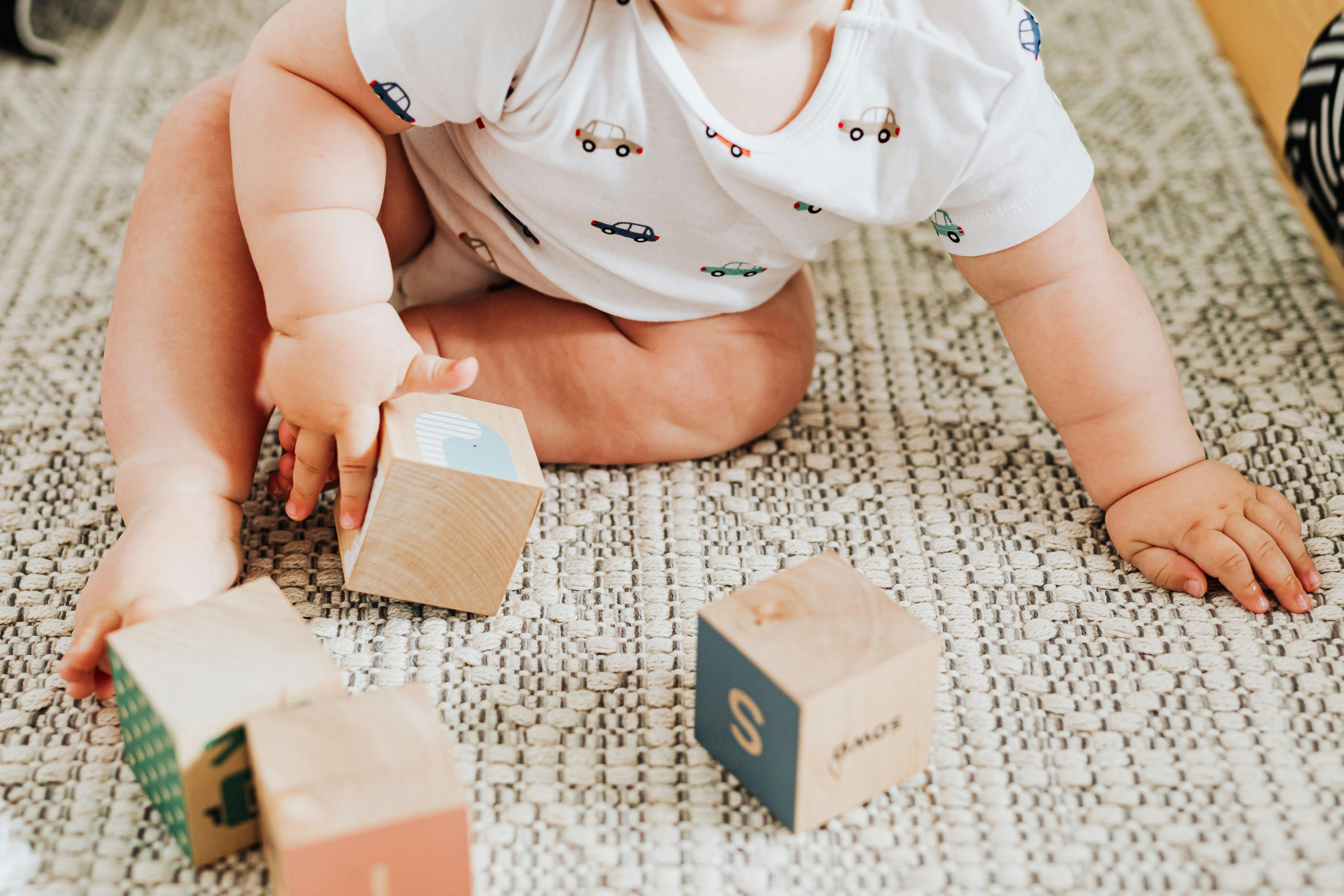
- Use Organizational Toys: Join them in using simple toys that allow for independent and coordinated play, such as blocks, stacking rings, and shape-sorters.
- Offer multi-sensory experiences: Encourage deeper processing by incorporate sights, sounds, smells and textures to your social routines.
- Be Patient and Persistent: Building joint attention skills takes time and patience. Celebrate small successes and continue to provide opportunities for interaction.
Tips for Parents:
- Be Responsive: Respond to your infant’s attempts to communicate, such as babbling, gesturing, or reaching for objects. Offer attention and deliver items or activities or their desire quickly when they “ask”. When your baby’s bids are unclear, presume communicative intent and respond accordingly.
- Occasion Eye Contact: Offer exaggerated expressions and sing-song speech during social routines you encourage your baby to orient to your face.
- Create a Routine: Establish a predictable routine that includes regular opportunities for interaction and play.
- Seek Professional Support: For guidance and support in teaching joint attention skills, consult with a developmental pediatrician or joint attention specialist (like me!).
Schedule a consultation through my referral page
To read more on joint attention and infant learning:
- Download my free e-book for parents of infants 6-9 months
- See my post Understanding Joint Attention: A Key Social Skill for Children
 Spectrum Behavioral Services of Kentuckiana